Your CDL career hangs on one 45-minute appointment. Pass the DOT physical exam, and you’re clear to haul freight across America. Fail it, and your truck sits idle while bills pile up.
You need to know what happens in that exam room before you walk through the door. The 2026 medical standards have shifted, especially around sleep apnea screening and diabetes management. Missing one critical requirement could cost you months of income.
This guide breaks down everything about the DOT physical exam process. You’ll learn the exact tests examiners perform, which medical conditions automatically disqualify you, how much you’ll pay, and where to find certified examiners who understand commercial driver needs.Key Takeaways
- DOT physical cost ranges from $50 to $150 in 2026, varying by location and examiner
- Only examiners listed on the National Registry of Certified Medical Examiners can issue valid medical certificates
- Sleep apnea screening is now mandatory for high-risk drivers, affecting medical card duration
- Blood pressure above 140/90 triggers temporary certification or immediate disqualification
- Most medical cards last 24 months, but conditions like diabetes may require annual renewals
What Is a DOT Physical Exam and Why You Can’t Drive Without It
The DOT physical exam is a federally mandated health screening required for anyone operating commercial vehicles. The Federal Motor Carrier Safety Administration created these standards to keep unsafe drivers off highways.
You cannot legally drive a commercial vehicle weighing over 10,000 pounds without passing this exam. The certification proves you’re physically capable of handling an 80,000-pound truck safely for hours at a time.
Here’s what makes this different from your regular doctor checkup: your family physician cannot perform this exam unless they’re listed on the National Registry of Certified Medical Examiners. These specially trained examiners know the exact Federal Motor Carrier Safety Regulations that determine if you qualify.
The exam produces a DOT Medical Card (officially called Form MCSA-5876). This card must stay in your possession while driving commercially. State police and DOT inspectors will ask to see it during roadside checks.
But here’s what catches most drivers off guard: the standards changed significantly in 2026.
How Much Does a DOT Physical Cost in 2026
The cost of DOT physical exam appointments varies based on where you live and which provider you choose. Most drivers pay between $50 and $150 for the basic examination.
Urban areas typically charge more than rural locations. Expect to pay $90 to $130 in major cities like Los Angeles, Chicago, or New York. Smaller towns often offer exams for $50 to $80.
Walk-in clinics generally charge less than private medical offices. Urgent care centers that specialize in occupational health screenings usually fall in the $75 to $100 range.
Your employer might cover this cost. Many trucking companies pay for initial exams and renewals as part of their driver compliance programs. Ask your fleet manager before scheduling.
Some expenses increase the base price:
- Sleep apnea screening adds $150 to $400
- Vision specialist referrals cost $75 to $200
- Hearing tests from audiologists run $50 to $150
- Cardiac stress tests range from $200 to $500
Insurance rarely covers DOT physical exam costs because it’s an occupational requirement, not medical treatment. Budget for out-of-pocket payment.
Here’s the money-saving truth most drivers miss: shopping around saves you 40% or more. Three clinics in the same city might charge $60, $95, and $140 for identical exams.
Where to Find a DOT Physical Exam Near Me
Finding a DOT physical near me starts with one critical requirement: the examiner must appear on the FMCSA medical examiner database. Exams from unlisted providers are worthless.
Search the official National Registry of Certified Medical Examiners at nationalregistry.fmcsa.dot.gov. Enter your zip code to see every qualified examiner within your preferred distance.
The database shows:
- Examiner name and credentials
- Clinic address and phone number
- Days and hours of availability
- Whether they accept walk-ins
Most major truck stops now have certified examiners on-site. Pilot Flying J, Love’s, and TA travel centers often partner with medical providers who understand driver schedules. You can get your exam during a rest break.
Occupational health clinics specialize in commercial driver exams. Companies like Concentra, WorkCare, and MedExpress have locations nationwide. They process exams faster because they handle dozens daily.
Urgent care centers offer convenience but might lack experience with CDL medical requirements 2026 nuances. The examiner’s familiarity with trucking-specific conditions matters when borderline cases arise.
Chiropractors who’ve completed FMCSA certification can perform exams. Some drivers prefer them because they often charge less and understand musculoskeletal issues drivers face.
Call ahead to confirm three things: current DOT physical cost, whether they accept walk-ins, and their average wait time. Some popular locations book weeks in advance during peak hiring seasons.
But here’s what you need to know before you schedule: not all examiners treat drivers fairly.
What to Expect During Your DOT Physical Exam
Your DOT physical exam follows a standardized protocol defined in CFR 49 Part 391.41. Every examiner must test the same things in the same way.
The appointment takes 30 to 45 minutes. Arrive 15 minutes early to complete paperwork about your medical history.
You’ll answer detailed questions about:
- Past surgeries and hospitalizations
- Current medications and dosages
- History of heart disease, diabetes, or seizures
- Sleep quality and snoring patterns
- Vision or hearing problems
- Mental health conditions
Bring a list of your medications with exact names and dosages. Examiners need to verify nothing creates safety risks while driving.
The physical examination includes:
Vision Testing: You must have 20/40 vision in each eye, with or without correction. Peripheral vision must extend 70 degrees in each direction. Color vision must distinguish red, green, and amber traffic signals.
Hearing Assessment: You’ll take a whisper test from five feet away or use an audiometer. You must hear a forced whisper or average better than 40 decibels in your best ear.
Blood Pressure Measurement: Your reading determines certification length. Normal pressure (below 140/90) earns a two-year card. Elevated readings trigger shorter certifications or immediate failure.
Urinalysis: A dipstick test checks for sugar, protein, and blood. High glucose indicates diabetes requiring additional testing.
Physical Capability Check: The examiner evaluates your spine, joints, and limbs. You’ll demonstrate range of motion, grip strength, and balance. Any condition limiting your ability to steer, brake, or couple trailers matters.
Heart and Lung Exam: A stethoscope checks for irregular heartbeat, murmurs, or breathing abnormalities. Examiners look for signs of heart disease or respiratory problems.
Neurological Screening: Simple tests verify you have normal reflexes, coordination, and mental alertness. Any signs of stroke, seizure disorder, or cognitive impairment require specialist evaluation.
The examiner measures your height, weight, and calculates BMI. Obesity increases scrutiny for sleep apnea risk factors.
Here’s the part that surprises drivers: the examiner asks about snoring and daytime sleepiness. Your answers trigger sleep apnea screening requirements.

DOT Medical Card Requirements and Validity Periods
Your DOT medical card proves you meet federal fitness standards. The official document is Form MCSA-5876, printed on tamper-resistant paper.
Valid cards display:
- Your full legal name matching your CDL
- Medical examiner’s name and NRCME number
- Examination date
- Expiration date
- Any restrictions or limitations
Most drivers receive 24-month certifications. Your card expires exactly two years from your exam date, not your birthday or CDL renewal.
Certain conditions shorten certification periods:
One-Year Certifications go to drivers with:
- Controlled high blood pressure (140-159/90-99)
- Well-managed diabetes
- Single missing limb with proper waiver
- Monocular vision with valid exemption
- Certain heart conditions cleared by cardiologists
Three-Month Certifications apply when:
- Blood pressure reads 160-179/100-109
- New diabetes diagnosis needs monitoring
- Recent cardiac event requires follow-up
- Medical condition needs short-term evaluation
You must carry the physical card or digital copy while driving. Some states now allow drivers to store certification in mobile apps linked to the DOT medical examiner database.
Your examiner submits results electronically to FMCSA within two business days. The Federal Motor Carrier Safety Administration uploads your certification to a national database that state licensing agencies access.
You still need to submit the card to your state DMV, even though it’s in the federal database. State requirements vary, so check your local procedures.
But losing your medical certification isn’t the worst outcome. Some health conditions block you from driving entirely.
Complete List of DOT Physical Disqualifying Conditions 2026
The medical conditions that prevent CDL certification fall into automatic disqualifications and case-by-case evaluations. Understanding the difference keeps you from wasting money on exams you can’t pass.
Permanent Automatic Disqualifications include:
Vision Loss: Complete blindness or vision worse than 20/40 in both eyes that cannot be corrected. Loss of peripheral vision beyond the 70-degree minimum. Inability to distinguish traffic signal colors.
Hearing Impairment: Cannot hear a forced whisper from five feet away or test worse than 40 decibels average in your better ear, even with hearing aids.
Insulin-Dependent Diabetes: This changed in 2026. Insulin users can now qualify through the exemption program, but the process requires extensive documentation. You need three months of blood sugar logs and letters from your endocrinologist.
Epilepsy and Seizure Disorders: Any seizure within the past 10 years disqualifies you. The only exception is a single childhood seizure before age five, or seizures that occurred during documented withdrawal from substances.
Mental Disorders: Psychosis, schizophrenia, or any condition causing severe personality disturbances that interfere with safe driving. Well-controlled depression and anxiety typically don’t disqualify you.
Cardiovascular Disease: Recent heart attack (within six months), current chest pain from coronary insufficiency, or high-risk arrhythmias. Controlled conditions with cardiologist clearance may qualify.
Respiratory Disease: Advanced emphysema, chronic bronchitis requiring oxygen, or any breathing disorder causing severe dyspnea. Well-managed asthma usually passes.
Substance Abuse: Current use of Schedule I drugs (including marijuana, regardless of state laws). Recent DUI or drug-related driving offense. Failed drug tests without completion of return-to-duty protocols.
Conditions Requiring Individual Evaluation include:
Musculoskeletal Issues: Missing limbs, arthritis limiting range of motion, chronic back pain, or joint replacements. Examiners assess whether you can physically operate vehicle controls safely. The truck driver health program offers resources for managing these conditions.
Neurological Conditions: History of stroke, multiple sclerosis, muscular dystrophy, or neuropathy. Specialist clearance letters help demonstrate stable conditions don’t impair driving ability.
Psychiatric Medications: Antidepressants, anti-anxiety medications, and mood stabilizers require review. Examiners verify medications don’t cause drowsiness or impair reaction time.
The examiner uses CFR 49 Part 391 to determine if your specific situation meets standards. Two drivers with the same diagnosis might get different results based on severity and control.
Here’s what catches drivers unprepared: temporary conditions also disqualify you.
Current injuries requiring casts, recent surgeries needing recovery time, or acute illnesses causing impairment all delay certification. You must heal completely before retaking the exam.
But one condition creates more confusion than any other medical issue.
Sleep Apnea CDL Disqualification Rules and Testing Requirements
Sleep apnea CDL disqualification fears keep drivers awake at night, ironically worsening the very condition they’re worried about. The 2026 guidelines clarified what actually triggers testing and how diagnosis affects your career.
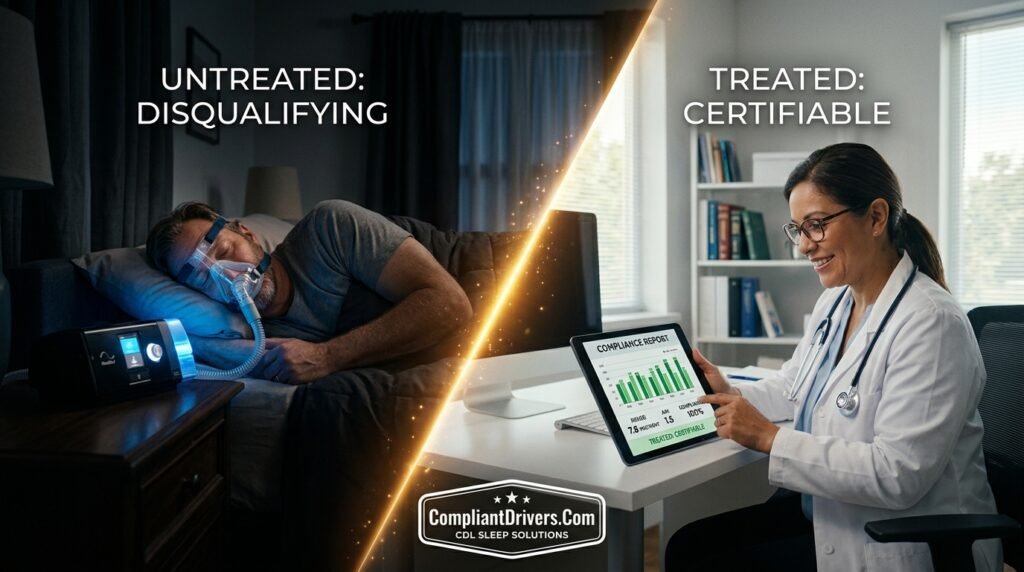
Sleep apnea doesn’t automatically disqualify you. Untreated sleep apnea does.
The condition causes breathing interruptions during sleep, leading to dangerous daytime drowsiness. Studies show untreated sleep apnea increases crash risk by 250%.
When Examiners Screen for Sleep Apnea:
Your examiner must evaluate sleep apnea risk if you have three or more of these factors:
- BMI over 33
- Neck circumference over 17 inches (men) or 15.5 inches (women)
- Diagnosed high blood pressure
- History of snoring loud enough to hear through closed doors
- Witnessed breathing pauses during sleep
- Excessive daytime sleepiness
- Previous diagnosis of sleep apnea
High-risk drivers receive a temporary medical card (usually 30-90 days) and must complete a sleep study. The examiner won’t issue a full-term certification until you provide study results.
The Sleep Study Process:
Sleep apnea diagnosis requires polysomnography, either in a sleep lab or with home testing equipment. The study measures breathing patterns, oxygen levels, and sleep disruptions throughout the night.
Results show your Apnea-Hypopnea Index (AHI), which counts breathing interruptions per hour:
- AHI under 5: No sleep apnea
- AHI 5-15: Mild sleep apnea
- AHI 15-30: Moderate sleep apnea
- AHI over 30: Severe sleep apnea
Sleep studies cost $500 to $3,000 depending on whether you use home testing or lab-based monitoring. Insurance often covers this because it’s diagnostic medical testing, unlike the DOT physical exam itself.
Certification with Sleep Apnea:
Diagnosed drivers can still get certified if they demonstrate effective treatment. That means using a CPAP machine (Continuous Positive Airway Pressure device) consistently.
Your CPAP machine records usage data. Examiners require:
- Minimum 4 hours use per night
- Use on at least 70% of nights
- Download reports showing compliance
- Follow-up letter from sleep specialist confirming treatment effectiveness
Drivers using CPAP typically receive one-year medical cards requiring annual verification of continued treatment compliance. Some examiners grant two-year certifications if you show two years of perfect CPAP compliance and symptoms have completely resolved.
What Happens If You Refuse Testing:
Declining recommended sleep apnea testing results in exam failure. Examiners cannot certify drivers who show high-risk factors but refuse evaluation.
Some drivers try to game the system by losing weight before exams to avoid screening. While weight loss does reduce sleep apnea risk, examiners still screen based on all risk factors, not just BMI.
Here’s the perspective shift that helps: CPAP machines improve your life beyond keeping your CDL. Users report better sleep quality, more daytime energy, lower blood pressure, and reduced heart disease risk. Managing fatigue also connects to broader truck driver fatigue prevention strategies.
But sleep apnea isn’t the only chronic condition creating certification questions.

Diabetes, Blood Pressure, and Other Chronic Conditions
CDL medical requirements 2026 now offer more flexibility for chronic conditions than ever before. The key is documentation proving your condition is well-managed.
Diabetes and Commercial Driving:
Type 2 diabetes controlled with diet and oral medications typically qualifies for two-year certifications. Your examiner checks your urinalysis and may request an A1C blood test showing three-month average blood sugar.
Target ranges for certification:
- Fasting blood sugar: 70-150 mg/dL
- A1C level: Below 8%
- No recent hypoglycemic episodes
- No diabetes-related complications (neuropathy, vision damage, kidney disease)
Insulin-dependent diabetes now qualifies through the Insulin-Treated Diabetes Mellitus (ITDM) exemption program. You’ll need:
- Endocrinologist evaluation and clearance letter
- Three months of blood glucose monitoring logs
- Evidence of stable control without severe hypoglycemia
- Annual vision and neurological exams
- One-year certifications with annual renewal
The process takes 60-90 days for approval, so start early.
High Blood Pressure Certification:
Blood pressure limits determine your medical card duration. The examiner takes your reading after you’ve rested five minutes.If your blood pressure reads high during the exam, some examiners allow you to rest 15 minutes and retest. White coat hypertension (anxiety-induced elevated readings) affects many drivers.
Drivers on blood pressure medication can receive full certifications if readings stay normal. The examiner verifies your medications don’t cause drowsiness or other side effects impairing driving ability.
Heart Disease and Cardiac Events:
Previous heart attack requires six-month waiting period before certification. You’ll need a cardiologist evaluation including stress test, echocardiogram, and clearance letter.
Current angina (chest pain from heart disease) disqualifies you. Stable conditions after procedures like stents or bypass surgery may qualify with specialist documentation.
Mental Health Conditions:
Anxiety and depression controlled with medication don’t automatically disqualify you. The examiner evaluates:
- Medication stability (no recent changes)
- Absence of severe symptoms
- No suicidal ideation
- No medication side effects affecting alertness
Your examiner might request a letter from your psychiatrist or psychologist confirming stable condition and medication compatibility with driving. Resources for truck driver mental health can provide additional support.
Medications That Raise Red Flags:
Examiners scrutinize medications causing drowsiness, impairment, or dependence:
- Narcotic pain relievers (oxycodone, hydrocodone)
- Benzodiazepines (Xanax, Valium, Ativan)
- Sleep medications (Ambien, Lunesta)
- Medical marijuana (disqualifying regardless of prescription)
- Muscle relaxants
- Certain antihistamines
You might qualify if you switched to non-sedating alternatives before the exam. Bring documentation from your prescribing physician explaining why the medication doesn’t impair your driving ability.
Here’s what most drivers don’t realize: good documentation solves borderline cases.
Top Reasons Drivers Fail DOT Physical Exams
DOT physical fail reasons usually come from preventable issues. Understanding common failures helps you prepare properly.
The Most Common Failures:
Uncontrolled Blood Pressure tops the list. About 25% of failed exams result from readings above 140/90. Many drivers don’t monitor their blood pressure between exams and arrive with dangerously high readings.
Incomplete Medical History causes automatic failures. Leaving blank spaces on the form or failing to disclose conditions discovered during examination creates credibility issues. Examiners must fail you if they suspect you’re hiding disqualifying conditions.
Missing Medication Information blocks certification. Showing up without knowing your exact medication names, dosages, and prescribing physicians forces examiners to delay certification until you provide details.
Vision Problems disqualify drivers who haven’t updated glasses or contact lenses. Your prescription might have changed since your last exam. Get an eye exam 30 days before your DOT physical exam if you notice vision changes.
Hearing Loss failures often surprise older drivers who haven’t noticed gradual decline. If you frequently ask people to repeat themselves or raise TV volume higher than others prefer, get hearing tested before your DOT exam.
Undiagnosed Diabetes shows up during urinalysis. High glucose in urine requires additional testing and specialist evaluation before certification. Drivers with risk factors should get A1C testing done beforehand.
Sleep Apnea Refusal leads to failed exams when high-risk drivers decline recommended testing. Examiners cannot certify you if they suspect untreated sleep apnea.
Substance Use Issues include recent DUI convictions, failed drug tests, or admission of current illegal drug use. Marijuana use disqualifies you even in states where it’s legal, because it remains federally prohibited under Schedule I.
Recent Surgeries or Injuries requiring recovery time trigger temporary disqualifications. Don’t schedule your exam until you’re fully healed and released from physician care.
Inadequate Specialist Documentation for chronic conditions causes delays. If you have diabetes, heart disease, seizure history, or other serious conditions, bring current letters from specialists clearing you for commercial driving.
How to Avoid Common Failures:
Schedule a pre-exam physical with your regular doctor 60 days before your DOT medical card expires. This identifies problems you can address before the official exam.
Monitor your blood pressure daily for two weeks before the exam. If readings run high, adjust medications with your doctor’s guidance.
Bring comprehensive documentation:
- Complete medication list with dosages
- Specialist clearance letters for chronic conditions
- Recent lab results (A1C, lipid panel, kidney function)
- Sleep study results if you use CPAP
- Vision and hearing test results if borderline
Get adequate sleep the night before your exam. Exhaustion raises blood pressure and creates sleep apnea concerns.
Stay hydrated but limit caffeine on exam day. Caffeine temporarily spikes blood pressure readings.
Arrive relaxed and early. Rushing to appointments raises your blood pressure and heart rate.
Here’s the strategy that works: treat your DOT physical exam like a final exam you need to pass. Preparation makes the difference between two-year certification and immediate failure.
But what happens when you do fail?
What to Do If You Fail Your DOT Physical
Failing your DOT physical exam doesn’t end your driving career. The path forward depends on why you failed and how quickly you can address the issue.
Immediate Steps After Failure:
Ask the examiner exactly which standards you didn’t meet. Get specific numbers (blood pressure reading, vision measurement, hearing test results) and copies of test results.
Request a written summary of the failure reasons. You’ll need this documentation for your employer and to guide corrective actions.
Understand your timeline. Some failures allow immediate retesting after correction. Others require waiting periods or specialist evaluations.
Addressing Different Failure Types:
High Blood Pressure Failures: Schedule an appointment with your primary care physician within 48 hours. You need medication adjustment or new prescriptions to lower your pressure.
Monitor readings daily at home. Once you achieve three consecutive days below 140/90, you can retest. Bring documentation showing controlled readings.
Some drivers get temporary certifications (30-90 days) while establishing blood pressure control. You can drive during this period but must pass a recheck before the temporary card expires.
Vision Failures: Visit an optometrist immediately for updated prescription glasses or contacts. Vision usually corrects easily once you have proper lenses.
If corrective lenses don’t achieve 20/40 vision, ask about vision exemption programs for established drivers with good safety records.
Hearing Failures: See an audiologist for professional hearing testing. Modern hearing aids often restore hearing to certifiable levels.
Hearing exemptions exist for drivers who’ve operated commercially for at least three years with hearing loss, if they have clean safety records.
Diabetes Discoveries: Schedule appointments with an endocrinologist to establish treatment and control. You’ll need three months of blood sugar logs before retesting.
Request a temporary certification if possible, though newly diagnosed diabetes usually requires waiting until control is established.
Sleep Apnea Referrals: Schedule the sleep study immediately. Home sleep tests provide faster results than sleep lab appointments.
If diagnosed, begin CPAP treatment and demonstrate 30 days of compliance before recertification attempts. Download compliance reports from your CPAP machine to show the examiner.
Medication Issues: Work with prescribing physicians to switch to non-sedating alternatives. Some medication changes take weeks to become effective and stable.
Your Rights and Options:
You can get a second opinion from a different certified medical examiner. Bring all documentation from the first exam to avoid duplicate testing costs.
Second examiners must follow the same standards, but interpretation of borderline cases varies. An examiner experienced with commercial drivers might better understand how to document your fitness.
Apply for exemption programs if you have permanent conditions that don’t impair safe driving ability:
- Vision exemption program for monocular vision
- Hearing exemption for established drivers
- Diabetes exemption for insulin users
- Missing limb waivers with proper prosthetics
Exemptions require extensive documentation and FMCSA approval, taking 60-180 days to process.
Temporary Work Solutions:
If your failure creates an extended disqualification, consider:
- Yard dog positions (moving trailers in facilities, not requiring medical cards in some states)
- Dispatcher or logistics coordinator roles
- Truck driving instructor positions (if properly certified)
- Non-CDL delivery driving (vehicles under 10,000 pounds)
Many carriers offer desk positions to experienced drivers during medical recovery periods.
Financial Planning During Disqualification:
Contact your employer immediately about your situation. Some companies offer:
- Paid time off while you address medical issues
- Modified duty assignments
- Short-term disability benefits
- Health insurance continuation
Apply for unemployment benefits if your disqualification exceeds temporary periods and your employer cannot accommodate you.
Check if your situation qualifies for short-term disability insurance if you carry individual coverage.
But here’s what you really need to understand: most failures are temporary setbacks, not permanent career endings.
How to Find the Best DOT Medical Examiner for Your Situation
Not all certified examiners provide equal service. Finding the right examiner prevents unnecessary failures and ensures fair treatment.
What Makes a Good DOT Examiner:
Experience with Commercial Drivers matters tremendously. Examiners who primarily serve trucking industry understand borderline cases better than those who occasionally perform DOT exams.
Ask how many DOT physical exams they conduct monthly. Examiners doing 50+ monthly have seen every situation. Those doing five monthly lack the experience base to handle complex cases.
Understanding of Exemption Programs separates great examiners from mediocre ones. Knowledgeable examiners guide you through diabetes exemptions, vision programs, and specialist referral processes.
Communication Style impacts your experience. Good examiners explain test results, discuss borderline findings before failing you, and suggest specific steps for correction.
Availability and Scheduling affects your planning. Examiners offering evening and weekend appointments accommodate your driving schedule better than 9-to-5 operations.
Questions to Ask Before Scheduling:
Call potential examiners and ask:
- How many DOT physical exams do you perform weekly?
- What’s your experience with [specific condition] certifications?
- Do you handle sleep apnea screenings in-house or refer out?
- Can you process exemption program applications?
- What’s your policy if my blood pressure reads high but I’m normally controlled?
- Do you offer same-day walk-in appointments?
- What’s your exact cost of DOT physical exam including any additional tests?
Their answers reveal expertise level and customer service approach.
Red Flags to Avoid:
Skip examiners who:
- Refuse to discuss their experience or qualifications
- Can’t clearly explain the exam process
- Pressure you to schedule immediately without answering questions
- Charge significantly more than area average without justification
- Have numerous negative reviews mentioning unfair failures
- Rush through exams in under 20 minutes
Using Online Reviews Effectively:
Search Google reviews specifically for comments about:
- Fair treatment of drivers with chronic conditions
- Clear communication about failure reasons
- Willingness to work with drivers on borderline results
- Staff professionalism and efficiency
- Accuracy of quoted prices
Ignore one-off complaints from obviously angry drivers who clearly failed legitimate standards. Focus on patterns across multiple reviews.
Industry-Specific Examiner Networks:
Some examiners partner with trucking companies and industry associations. These relationships indicate examiner understanding of commercial driving demands.
Ask your employer which examiners they recommend. Fleet managers know which local examiners treat their drivers fairly and process certifications efficiently.
Check with local trucking associations for preferred examiner lists. Many state associations maintain referral networks of driver-friendly medical providers.
Building a Relationship with Your Examiner:
Using the same examiner for all renewals creates continuity. They understand your medical history and can track changes over time.
Examiners familiar with your baseline health can better evaluate new findings. They know if your blood pressure typically runs slightly elevated or if today’s reading is unusual.
Long-term relationships also help when borderline situations arise. Examiners who’ve certified you for years and seen your safe driving record tend to work harder to keep you qualified.
Schedule your renewals with the same provider who gave you the best experience. Building this relationship pays dividends throughout your driving career, especially as you age and medical complexities increase.
Understanding proper safety protocols ties directly to maintaining your certification. Learn more about comprehensive safe truck driving practices that support long-term career success.
The DOT Medical Examiner Database and How to Use It
The DOT medical examiner database serves as your gateway to finding legitimate certified examiners. Knowing how to search effectively saves time and prevents invalid certifications.
Accessing the National Registry:
Visit the official National Registry of Certified Medical Examiners website at nationalregistry.fmcsa.dot.gov. This is the only authoritative source for certified examiner listings.
The database updates in real-time as examiners gain certification or lose it due to expired credentials, violations, or voluntary withdrawal.
Search Functions and Filters:
The basic search lets you enter:
- ZIP code with distance radius (5, 10, 25, 50, 100 miles)
- City and state
- Examiner name (if you want to verify someone specific)
Advanced filters narrow results by:
- Medical specialty (MD, DO, DC, NP, PA)
- Languages spoken
- Whether examiner accepts walk-ins
Reading Search Results:
Each listing displays:
- Full name and credentials
- NRCME registry number
- Practice address
- Phone number
- Certification expiration date
Note the certification expiration date. Examiners must recertify every 10 years. Those nearing expiration might not be taking new patients.
Verifying Examiner Credentials:
Always verify credentials before scheduling, especially if someone contacts you offering exams. Scams exist where fake examiners collect fees for invalid certifications.
Search the specific examiner’s name in the database. If they don’t appear, they cannot legally perform your DOT physical exam.
Check that their listed address matches where they want you to come for examination. Some scammers steal legitimate NRCME numbers but operate from different locations.
Understanding Credential Types:
Different medical professionals can become certified examiners:
Medical Doctors (MD) and Doctors of Osteopathy (DO) make up the majority. They have broadest training for complex medical conditions.
Doctor of Chiropractic (DC) examiners often charge less and understand musculoskeletal issues drivers face. They can handle most standard exams but may need to refer complex cases.
Nurse Practitioners (NP) and Physician Assistants (PA) can certify under supervision. They often provide excellent service at lower cost than physicians.
No credential type is inherently better. Experience with commercial drivers matters more than degree letters.
What Happens After Your Exam:
Your certified examiner must submit your results to the FMCSA medical examiner database within two business days of your exam. This electronic submission creates your federal record.
You can verify submission by checking with your state licensing agency. They access the federal database to confirm your medical certification status.
Some states still require you to physically present your medical certificate at the DMV, even though it’s in the federal system. Check your state’s specific requirements to avoid license suspension.
If Your Certification Doesn’t Appear:
Sometimes technical glitches delay database updates. If your certification doesn’t show in the federal system within five business days:
- Contact the examiner’s office to confirm they submitted results
- Request submission confirmation and tracking number
- Contact FMCSA if the examiner confirms submission but records still don’t appear
Keep your physical medical card as backup proof until database issues resolve.
Maintaining Continuous Certification:
Schedule renewal exams 30-60 days before expiration. This buffer prevents gaps if unexpected medical issues arise requiring additional testing or specialist consultations.
Calendar reminders starting 90 days before expiration ensure you don’t forget. A lapsed medical card makes commercial driving illegal immediately.
Some examiners offer automatic renewal reminders via email or text. Ask if they provide this service when you schedule.
But getting certified is just the beginning. Maintaining your health between exams determines career longevity.
Preparing for Your DOT Physical: What to Bring and How to Get Ready
Proper preparation prevents exam failures and reduces stress. Walking in ready increases your chances of passing with a full two-year certification.
Documents to Bring:
Current Medication List with exact names, dosages, and prescribing physicians. Include over-the-counter medications and supplements you take regularly.
Glasses or Contact Lenses if you use vision correction. Bring your current prescription and any backup glasses.
Hearing Aids if you use them. Examiners test your hearing with aids in place.
CPAP Compliance Report if you have sleep apnea. Download the 30-90 day usage report from your machine showing compliance.
Specialist Clearance Letters for any chronic conditions:
- Cardiologist letter if you have heart disease
- Endocrinologist letter for diabetes
- Neurologist letter for seizure history
- Psychiatrist letter for mental health conditions
Blood Sugar Logs if you have diabetes, showing three months of readings and A1C results.
Previous DOT Medical Cards showing your certification history. This helps examiners see your baseline health patterns.
Photo ID and driver’s license for verification.
Physical Preparation:
Sleep Well for three nights before your exam. Exhaustion raises blood pressure and creates sleep apnea concerns.
Stay Hydrated but avoid excessive water intake the morning of your exam (you’ll need to provide urine sample).
Avoid Caffeine for 24 hours before your exam. Coffee, energy drinks, and soda temporarily spike blood pressure.
Skip the Salt for 48 hours prior. Sodium raises blood pressure readings significantly.
Don’t Smoke on exam day. Nicotine increases heart rate and blood pressure.
Eat Light the morning of your exam. Heavy meals can affect blood pressure and make examination uncomfortable.
Exercise Moderately but avoid intense workouts within 24 hours. Heavy exercise can elevate blood pressure temporarily.
Mental Preparation:
Arrive Early to complete paperwork without rushing. Plan to be there 15 minutes before your appointment.
Practice Relaxation techniques if you experience white coat hypertension. Deep breathing for five minutes before blood pressure measurement helps.
Be Honest on your medical history form. Examiners find undisclosed conditions during examination, creating bigger problems than honest disclosure.
Ask Questions if you don’t understand something on the forms or during examination.
Strategic Scheduling:
Morning Appointments generally produce better results. Blood pressure and stress levels are typically lower earlier in the day.
Mid-Week Days (Tuesday-Thursday) tend to be less crowded than Mondays or Fridays, meaning less wait time and stress.
Avoid DOT Inspection Blitz Periods when exam centers are packed with drivers trying to get certified quickly.
Pre-Exam Medical Optimization:
Schedule a check-up with your primary doctor 60 days before your DOT medical card expires. Address any emerging issues before the official exam.
Get your blood pressure under control if it’s been running high. Work with your doctor to adjust medications at least 30 days before your DOT exam.
Update vision prescriptions if you’ve noticed changes. Get new glasses or contacts 30 days before your exam so you’re comfortable wearing them.
Have hearing tested if you suspect problems. Getting hearing aids fitted and adjusted takes several weeks.
Complete recommended sleep studies immediately if previous examiners mentioned apnea concerns. Don’t wait until your renewal exam to address screening requirements.
The 48-Hour Protocol:
Follow this specific routine for two days before your exam:
- Monitor blood pressure morning and evening
- Limit sodium to under 1,500mg daily
- Drink 64oz water daily
- Avoid alcohol completely
- Sleep 7-8 hours nightly
- Skip caffeine and nicotine
- Eat mostly fruits, vegetables, and lean protein
- Practice stress reduction techniques
This protocol helps drivers with borderline health markers achieve passing results.
But even perfect preparation won’t help if you don’t understand what happens after you pass.
Understanding Your DOT Medical Card and Keeping It Valid
Your DOT Medical Card is your license to earn a living. Understanding how to maintain it prevents career interruptions.
Physical Card vs. Digital Records:
You receive a paper certificate (Form MCSA-5876) immediately after passing. This is your proof of certification until it appears in federal databases.
The card includes:
- Your full legal name
- Date of birth
- Medical examiner’s information and NRCME number
- Exam date and expiration date
- Any restrictions or limitations
- Signature and stamp
Laminate your card or keep it in a protective sleeve. Damaged cards are difficult to read during inspections.
Many carriers now use digital card storage apps. These apps link to the Federal Motor Carrier Safety Administration database and display your current certification status. However, you should still carry your physical card as backup.
State DMV Submission Requirements:
Even though your examiner submits results electronically to FMCSA, most states require you to physically present your card to the DMV.
State requirements vary:
- Some states accept mail-in submissions
- Others require in-person visits
- A few states automatically pull data from federal databases without driver action
- Deadlines range from 10 to 30 days after exam
Check your specific state’s rules. Failure to submit on time can trigger CDL suspension, even though you have a valid medical certification.
Restrictions and Limitations:
Some certifications include restrictions printed on the card:
- “Must wear corrective lenses”
- “Must wear hearing aid”
- “Accompanied by valid diabetes exemption”
- “Valid for intrastate commerce only”
- “Not valid for hazmat or passenger endorsement”
Violating your restrictions makes your certification invalid and can result in serious penalties. Know exactly what limitations apply to you.
Mid-Cycle Medical Changes:
New medical conditions arising between exams require immediate action. You must report conditions that might affect driving safety.
Develop these conditions? Report immediately:
- Heart attack or stroke
- New seizure diagnosis
- Vision loss beyond corrective lenses
- Loss of limb or major injury
- Insulin requirement for previously non-insulin diabetes
Your employer must remove you from driving duties until you obtain recertification from a medical examiner.
Some conditions don’t require immediate recertification but need monitoring:
- New medication prescriptions
- Minor surgeries with full recovery
- Temporary injuries that heal before your next exam
When in doubt, consult a certified medical examiner about whether you need early recertification.
Renewal Planning:
Set multiple reminders starting 90 days before expiration:
- 90 days out: Schedule exam appointment
- 60 days out: Complete pre-exam physician visit if needed
- 30 days out: Gather required documentation
- 14 days out: Confirm appointment
- Exam day: Bring all required materials
Early scheduling prevents last-minute rushes and gives you time to address unexpected issues.
What If You Miss Renewal Deadline:
Driving commercially with an expired medical card violates federal regulations. Penalties include:
- Out-of-service orders (immediate driving prohibition)
- Fines up to $25,000
- CSA safety points
- Potential CDL suspension
- Termination from employment
If your card expires, you must stop driving immediately and schedule a new exam. No grace period exists.
Interstate vs. Intrastate Certification:
Interstate certifications allow you to drive across state lines and require federal DOT physical standards.
Intrastate certifications limit you to driving within one state and may follow state-specific medical standards (often less strict than federal requirements).
Most commercial drivers need interstate certification even if they primarily drive locally, because occasional cross-state trips might be required.
Your medical card should specify which type of certification you hold. Using an intrastate card for interstate commerce violates regulations.
Keeping Copies and Records:
Maintain copies of all medical certifications throughout your career:
- Scan and save digital copies
- Keep physical copies in safe storage
- Store specialist letters and test results
- Document medication changes
- Track blood pressure logs if you have hypertension
This historical record helps future examiners understand your health trajectory and makes borderline case evaluations easier.
Proper health maintenance connects to comprehensive truck driver safety training that protects your career long-term.
Special Circumstances: Waivers, Exemptions, and Alternative Certifications
Some drivers need extra steps to maintain commercial driving privileges. Understanding exemption programs opens career paths for drivers with permanent conditions.
Federal Exemption Programs:
FMCSA offers several exemption programs for drivers who don’t meet standard requirements but can drive safely:
Vision Exemption Program allows drivers with monocular vision or vision that doesn’t meet 20/40 standards to drive commercially. Requirements include:
- At least three years recent commercial driving experience, OR
- One year recent experience with good safety record
- Vision of at least 20/40 in the good eye
- Field of vision of at least 70 degrees in the good eye
- No other disqualifying conditions
The application process requires detailed vision testing, ophthalmologist evaluation, and safety performance documentation. Exemptions last two years and require renewal.
Diabetes Exemption Program enables insulin-using diabetics to obtain certification. You’ll need:
- Endocrinologist evaluation and monitoring plan
- Three months of blood glucose logs showing stable control
- No severe hypoglycemic episodes requiring assistance
- Annual vision exams checking for retinopathy
- Regular A1C testing showing control under 8%
Applications take 60-90 days to process. You cannot drive during the review period unless you have temporary authorization.
Hearing Exemption Program covers drivers who don’t meet hearing standards but have driven safely with hearing loss. Requirements include:
- Three years of recent commercial driving experience
- Clean safety record
- Audiologist testing documenting hearing levels
- Demonstration of safe driving ability despite hearing loss
Seizure Disorder Waivers are extremely rare and require:
- No seizures for 10+ years
- Neurologist documentation of condition stability
- Proof of medication compliance
- Regular monitoring and testing
Few drivers qualify for seizure waivers because the risk is considered too high.
Limb Loss Waivers allow drivers with missing limbs to operate commercial vehicles:
- Specific vehicle modifications for your situation
- Demonstration of ability to perform all necessary driving tasks
- Skills test in modified vehicle
- Annual recertification
State-Level Waivers:
Some states offer additional waiver programs for intrastate commerce only. These don’t allow interstate driving but enable local/regional work.
State programs often have less restrictive requirements than federal exemptions. Check with your state motor vehicle department about available programs.
Skill Performance Evaluation (SPE) Certificates:
The SPE program allows drivers with certain physical conditions to demonstrate they can safely operate commercial vehicles despite not meeting standard requirements.
SPE evaluations involve:
- Medical examination by certified examiner
- Skills test in the type of vehicle you’ll drive
- Documentation of ability to perform all safety-related tasks
- Annual or biennial renewal depending on condition
Common SPE situations include:
- Partial limb loss with functional prosthetics
- Limited range of motion in joints
- Controlled seizure disorders
- Certain cardiac conditions with specialist clearance
Application Process for Exemptions:
Federal exemption applications require:
- Complete application forms from FMCSA website
- Medical documentation from treating specialists
- Driving record for past three years
- Safety performance data from employers
- Skills testing results if applicable
Applications are published in the Federal Register for public comment (required by law). This adds time to the approval process.
Budget 90-180 days for exemption approvals. Plan accordingly and don’t quit your current job until approval is confirmed.
Maintaining Exemptions:
Exemptions aren’t permanent free passes. You must:
- Recertify on the schedule specified in your exemption
- Maintain medical condition stability
- Report any changes in your medical status
- Keep clean safety record
- Undergo additional testing as required
Violations or safety incidents can trigger exemption revocation.
Cost Considerations:
Exemption applications don’t have federal fees, but associated costs include:
- Specialist evaluations: $200-$500
- Additional testing: $150-$800
- Skills tests: $100-$300
- Legal assistance (if needed): $500-$2,000
Budget at least $1,000 for the complete exemption process.
When Exemptions Don’t Apply:
Some conditions simply cannot be accommodated safely:
- Complete blindness
- Total deafness in both ears
- Uncontrolled epilepsy
- Active psychosis
- Current substance abuse
- Recent heart attack (within six months)
No exemption program exists for these conditions because they create unmanageable safety risks.
Focus your energy on conditions that have established exemption pathways rather than fighting battles that cannot be won.
Understanding when accidents happen and knowing your rights matters. Learn more about truck accident lawyer resources if incidents occur.
How DOT Physical Requirements May Change in 2026 and Beyond
CDL medical requirements 2026 reflect ongoing evolution in medical science and safety data. Staying ahead of changes protects your certification.
Current Discussions and Proposed Changes:
Mandatory Sleep Apnea Screening continues to be debated. While 2026 hasn’t made universal screening mandatory, pressure grows to standardize testing requirements across all examiners.
Current rules leave sleep apnea screening to examiner discretion based on risk factors. Proposals would require:
- BMI-based automatic screening at specific thresholds
- Mandatory testing equipment standards
- Standardized interpretation criteria
- National database tracking of diagnoses and treatment compliance
If implemented, these rules would increase exam costs but might reduce crash rates from fatigued driving.
Cardiovascular Screening Enhancements are under review. Current exams use basic stethoscope examination, but some safety advocates push for:
- EKG testing for drivers over 45
- Stress tests for high-risk individuals
- Coronary calcium scoring for drivers with multiple risk factors
Medical associations oppose these expansions as unnecessary and costly for most drivers.
Mental Health Screening Updates reflect growing awareness of psychological fitness. Proposed changes include:
- Standardized depression and anxiety screening tools
- Questions about medication compliance
- Evaluation of stress coping mechanisms
- Assessment of suicide risk factors
These changes aim to reduce driver suicide rates and stress-related crashes, though privacy concerns remain.
Technology Integration will likely expand:
- Telemedicine exam components for rural drivers
- Electronic health record integration
- Real-time prescription drug monitoring database checks
- Wearable device data incorporation for chronic condition monitoring
Aging Driver Considerations:
As the driver workforce ages, calls increase for:
- More frequent exams after age 60 (annually instead of every two years)
- Enhanced cognitive testing for older drivers
- Reaction time and reflexes assessment
- Memory and decision-making evaluations
Industry groups oppose age-based discrimination, arguing experience compensates for minor physical decline.
Medication Monitoring Changes:
Future requirements may include:
- Real-time prescription monitoring database checks during exams
- Pharmacist consultations on medication interactions
- Genetic testing for medication metabolism variations
- Regular reviews of long-term medication side effects
Diabetes Management Evolution:
Technology advances in diabetes care are simplifying certification:
- Continuous glucose monitors providing real-time data
- Insulin pumps with automatic adjustment
- Better tracking and reporting tools
- Expanded exemption program accessibility
Vision Standard Reassessment:
Some discussions propose:
- Enhanced peripheral vision testing beyond current 70-degree minimum
- Depth perception standardized testing
- Night vision evaluation
- Glare recovery testing
How to Stay Current on Changes:
Monitor these official sources:
- FMCSA website regulations section
- Federal Register for proposed rule changes
- Industry associations (ATA, OOIDA) communications
- Your medical examiner’s updates and newsletters
- CDL training programs and compliance services
Preparing for Potential Changes:
Proactive Health Management protects you regardless of rule changes:
- Maintain healthy weight to avoid BMI-triggered screenings
- Control blood pressure and blood sugar
- Get adequate sleep and manage stress
- Address emerging health issues early
- Keep detailed health records
Technology Adoption positions you well for future requirements:
- If diabetic, consider continuous glucose monitors
- Track sleep patterns with wearable devices
- Use blood pressure monitoring apps
- Maintain digital health records
Professional Development keeps you valuable:
- Advanced safety training certifications
- Technology skill updates
- Customer service excellence
- Perfect safety record maintenance
Drivers with clean records and excellent health face less scrutiny under new regulations than those with marginal compliance.
Financial Planning for potentially increased costs:
- Build savings to cover enhanced screening expenses
- Research insurance options that might cover new test types
- Plan for more frequent exam requirements
- Budget for potential extended recertification processes
Advocacy Involvement gives you voice in regulation development:
- Join driver associations that comment on proposed rules
- Participate in FMCSA listening sessions
- Contact congressional representatives about unreasonable proposals
- Share real-world impact data with regulators
Your practical experience matters to regulators designing rules that work in reality, not just theory.
The regulatory environment constantly evolves, but drivers who prioritize health and stay informed adapt successfully to changes.
Frequently Asked Questions About DOT Physical Exams
Most DOT physical exam appointments cost $50 to $150 depending on your location. Urban areas charge $90-$130 while rural clinics often charge $50-$80. Additional testing like sleep studies ($500-$3,000) or specialist consultations ($75-$500) increase total costs. Your employer may cover these expenses as part of driver compliance programs.
Search the official National Registry of Certified Medical Examiners at nationalregistry.fmcsa.dot.gov. Enter your zip code to find certified examiners within your preferred distance. Only examiners on this list can issue valid certifications. Major truck stops, occupational health clinics, urgent care centers, and some chiropractic offices offer exams.
Most medical cards last 24 months. However, certain conditions shorten certification periods: controlled high blood pressure or well-managed diabetes typically receive one-year cards, while blood pressure requiring monitoring gets three-month temporary certifications. Cards expire on the exact date listed, not your birthday or CDL renewal date.
Examiners evaluate vision (20/40 minimum), hearing (whisper test or audiometer), blood pressure (below 140/90 preferred), urinalysis (checking for diabetes), cardiovascular health, respiratory function, neurological condition, and musculoskeletal capability. They review your medical history, current medications, and screen for conditions like sleep apnea, diabetes, seizures, and substance abuse that affect driving safety.
Use the FMCSA medical examiner database at nationalregistry.fmcsa.dot.gov. Only examiners on this registry can issue valid certifications. Search by location, verify credentials before scheduling, and check reviews from other commercial drivers. Ask about examiner experience with commercial drivers and their policy on borderline cases.
Automatic disqualifications include vision worse than 20/40 uncorrected, hearing loss beyond limits, uncontrolled diabetes, epilepsy with seizures in past 10 years, severe mental disorders, recent heart attacks, advanced respiratory disease, and current substance abuse. Some conditions like controlled diabetes or single limb loss may qualify through exemption programs with proper documentation.
Yes, diagnosed sleep apnea doesn’t automatically disqualify you. You must demonstrate effective treatment with a CPAP machine showing at least 4 hours use per night on 70% of nights. Drivers using CPAP typically receive one-year certifications requiring annual compliance verification. Untreated sleep apnea or refusal to undergo recommended testing results in exam failure.
Common DOT physical fail reasons include blood pressure above 140/90, vision below 20/40, hearing loss beyond limits, uncontrolled diabetes, undisclosed medical conditions, medications causing impairment, refusing recommended sleep apnea testing, recent DUI or drug violations, and incomplete medical documentation. Missing or incorrect medication information also causes failures.
Type 2 diabetics controlled with diet and oral medications typically qualify for standard certifications. Insulin-dependent diabetics can qualify through the Federal Motor Carrier Safety Administration exemption program by providing endocrinologist clearance, three months of blood sugar logs, and demonstration of stable control. Exemption approval takes 60-90 days and requires annual recertification.
Blood pressure of 180/110 or higher causes immediate disqualification. Readings of 160-179/100-109 allow temporary three-month certification while you reduce pressure. Readings of 140-159/90-99 typically receive one-year certifications. Only pressure below 140/90 qualifies for full two-year certification without restrictions or monitoring requirements.
Your Next Steps to DOT Physical Success
Your DOT physical exam determines whether you earn a paycheck or sit on the sidelines. The difference between two-year certification and immediate failure comes down to preparation and understanding the process.
You now know exactly what examiners test, which conditions create problems, how much you’ll pay, and where to find qualified medical professionals. You understand that sleep apnea doesn’t end careers, diabetes patients can still drive, and most failures are temporary setbacks with clear solutions.
The 2026 standards reflect stricter enforcement of existing rules rather than dramatic new requirements. Examiners now pay closer attention to sleep apnea risk factors, medication side effects, and chronic condition management. Drivers who maintain their health year-round instead of scrambling before renewal appointments pass without issues.
Schedule your exam 30-60 days before your current DOT medical card expires. This buffer gives you time to address unexpected complications without creating certification gaps.
Choose your examiner carefully using the National Registry of Certified Medical Examiners database. Experience with commercial drivers matters more than convenience.
Prepare thoroughly by gathering documentation, controlling blood pressure, updating vision correction, and addressing any emerging health concerns with your regular physician first.
Your career depends on this appointment. Treat it with the seriousness it deserves.
Take action now. Check your current medical card expiration date, search for certified examiners in your area, and calendar your renewal appointment today. Your future self will thank you for planning ahead instead of panicking at the last minute.
Your health is your career. Protect both.
Last Updated: April 2026