



Interstate trucking requires more than an MC Number and a CDL. Commercial carriers crossing state lines need multiple permits that handle fuel taxes, vehicle registration, federal fees, and temporary movements. Missing even one credential can result in roadside citations, operational delays, and compliance audits that examine years of records.
This guide explains the four core permit types every interstate carrier should understand: IFTA for fuel tax reporting, IRP for proportional registration, UCR for annual federal fees, and trip permits for temporary coverage. We’ll cover what each permit does, who needs it, how to apply, and how to avoid common compliance mistakes that could affect your DOT compliance record.
⚠️ Important Permit requirements, fees, and procedures vary by state and change regularly. This information reflects general practices as of May 2026. Always verify current requirements with your base jurisdiction before making operational decisions.
What Interstate Carriers Need to Know
- IFTA handles quarterly fuel tax reporting for vehicles over 26,000 lbs operating across multiple jurisdictions
- IRP provides apportioned registration based on actual mileage patterns across member states
- UCR is a mandatory annual federal fee that funds state safety programs
- Trip permits cover temporary operations in states outside your regular registration
- Digital permit systems are now available in many states, reducing paperwork requirements
- Violations appear in federal safety databases and may affect insurance costs and shipper relationships
Why Multiple Permits Are Required
Trucking permits are legal authorizations that allow commercial vehicles to cross state lines. Unlike your operating authority, which grants permission to haul freight for compensation, permits handle the practical requirements of interstate commerce.
The Federal Motor Carrier Safety Administration establishes the regulatory framework, but individual states administer most programs through cooperative agreements. This creates a system where carriers obtain credentials from their home state that are recognized across multiple jurisdictions.
A typical interstate operation needs four concurrent permits:
IFTA credentials from your base state to report fuel taxes quarterly across all jurisdictions where you operate.
IRP registration from your base state that apportions fees among member states based on your mileage.
UCR registration filed annually through any participating state to fund federal programs.
Trip permits for temporary coverage in states outside your regular operating area.
Each permit serves a specific purpose. IFTA tracks fuel purchases and calculates taxes owed to each state. IRP distributes registration fees proportionally based on where you actually travel. UCR funds enforcement and safety programs. Trip permits provide short-term authority for unusual routes or one-time movements.
IFTA: Interstate Fuel Tax Agreement
The International Fuel Tax Agreement simplifies fuel tax collection across 48 U.S. states and 10 Canadian provinces. Instead of purchasing separate fuel permits in every jurisdiction, carriers report through one base state that distributes taxes appropriately.
Who Needs IFTA
IFTA applies to qualified motor vehicles that:
- Exceed 26,000 pounds gross vehicle weight, or
- Have three or more axles regardless of weight, or
- Operate in combination when total weight exceeds 26,000 pounds
If your vehicle crosses state or provincial lines and meets any of these criteria, you typically need IFTA credentials. This requirement applies whether you’re hauling general freight or specialized cargo requiring hazmat placards and shipping papers.
How IFTA Works
You apply through your base jurisdiction—typically the state where you register vehicles and maintain operational headquarters. After approval, you receive an IFTA license number, decals to display on both sides of each qualified vehicle, and quarterly reporting obligations.
Each quarter, you file a fuel tax return showing miles traveled and fuel purchased in every jurisdiction. Your base state calculates the net tax or refund owed, then distributes payments to member jurisdictions.
Quarterly filing deadlines are typically: May 1 for Q1, July 31 for Q2, October 31 for Q3, and January 31 for Q4. Late filings generally incur penalties plus interest on unpaid taxes.
Record-Keeping Requirements
IFTA typically requires detailed documentation for every fuel purchase including date and location, seller information, number of gallons and fuel type, price per gallon and total amount, and vehicle identification. Receipts missing required information may be rejected during audits.
Maintaining proper records is as critical for IFTA compliance as it is for your driver qualification files. Organized documentation protects you during audits and demonstrates regulatory commitment.
Common IFTA Issues
Missing or expired decals remain frequently cited violations. Officers verify credentials visually during roadside inspections, similar to how they check cargo securement compliance.
Inaccurate mileage reporting creates audit risk. States cross-reference reported miles against fuel purchases, weigh station crossings, and toll records through data-sharing systems coordinated by IFTA Inc.
Late quarterly filings incur penalties immediately, and repeated late filings may prompt compliance reviews.
Many states now support electronic fuel tax verification. Modern ELD systems can automatically track jurisdiction miles and generate quarterly reports, reducing transcription errors. However, acceptance of digital versus paper documentation varies by state.
IRP: International Registration Plan
The International Registration Plan eliminates separate registrations in every state you operate. One apportioned registration covers all member jurisdictions, with fees distributed based on your actual travel patterns.
Eligibility Requirements
IRP uses the same thresholds as IFTA: vehicles over 26,000 pounds GVWR, vehicles with three or more axles, or combinations exceeding 26,000 pounds operating interstate.
How Apportioned Registration Works
You report the percentage of miles traveled in each jurisdiction during the previous 12 months. Registration fees are distributed proportionally among those states.
For example, if you operate 40% of your miles in Illinois, 30% in Indiana, and 30% in Wisconsin, you pay 40% of Illinois’ full registration fee, 30% of Indiana’s fee, and 30% of Wisconsin’s fee. This is substantially less than paying full registration in each state.
New carriers estimate their first-year mileage distribution, then adjust during renewal based on actual operations.
What IRP Provides
Your apportioned registration includes license plates recognized in all member jurisdictions, a cab card listing every state where you’re registered, and annual validation stickers.
The cab card must remain in your vehicle at all times. It proves you’re authorized to operate in every listed state. Operating in jurisdictions not on your cab card requires trip permits.

Mileage Accuracy
Your reported mileage determines how fees are distributed among states. Auditors verify these figures against fuel purchase records, ELD or logbook data, toll transaction records, shipping documents, and weigh station crossings.
Substantial discrepancies between reported and actual travel patterns raise audit flags. IRP examinations typically cover three years of records, and findings can be as consequential as violations discovered during comprehensive DOT truck inspections.
For detailed information about current IRP requirements and member jurisdictions, visit the International Registration Plan official website.
Updates and Renewals
Registration renews annually according to your base state’s schedule. When you add vehicles to your fleet, file supplemental applications within the required timeframe (often 30 days). When retiring vehicles, notify your base jurisdiction promptly to adjust fees.
UCR: Unified Carrier Registration
The Unified Carrier Registration program is an annual federal fee that funds state motor carrier safety programs. Despite being mandatory for all interstate operations, UCR is frequently overlooked because it operates separately from IFTA and IRP.
Who Must Register
UCR applies to motor carriers operating in interstate commerce, freight forwarders, brokers, and leasing companies. Even single-truck operations must maintain current UCR registration.
Fee Structure
Fees are tiered by fleet size. For 2026, the maximum fee schedule typically ranges from around $76 for operations with 0-2 vehicles to approximately $7,511 for fleets exceeding 1,000 units. Individual states may charge less but cannot exceed federal maximum amounts.
For current fee schedules and registration instructions, visit the official UCR portal.
Unlike IFTA and IRP, you can register through any participating state, not just your base jurisdiction. This allows fee comparison since amounts vary by state.
Registration Period
UCR coverage runs January 1 through December 31 annually. Registration typically opens in October for the following year.
Operating without current UCR—even briefly in early January—can result in citations during inspections. Because the effective date is January 1, violations can occur before many carriers realize their previous year’s registration has expired.
Enforcement
States gained access to real-time UCR databases, allowing officers to verify registration status during roadside inspections. While out-of-service orders for UCR violations alone are uncommon, some states view non-compliance as indicating broader regulatory issues.
Missing UCR registration can trigger the same scrutiny as other compliance gaps, including issues that might appear in your DOT drug test clearinghouse records or license point accumulation.
Trip Permits: Temporary Coverage
Trip permits provide short-term authority for vehicles without regular IRP registration in specific states. They cover infrequent movements, newly purchased equipment, and operations outside your normal routes.
When Trip Permits Are Needed
Common scenarios include:
- Delivering newly purchased vehicles before completing IRP registration
- One-time loads to states not listed on your IRP cab card
- Equipment repositioning or relocation moves
- Vehicles under 26,000 lbs making occasional interstate trips
Permit Duration and Costs
Most states issue permits for 72 hours, 10 days, or 30 days. Costs typically range from approximately $15 to $400 depending on duration, vehicle weight, and jurisdiction. Trip permit fees are standalone charges not credited toward future IRP registration.
How to Obtain Trip Permits
Many states now offer digital trip permits through online portals or mobile apps with instant credentials. States without online systems may require phone applications during business hours or in-person purchases at ports of entry or DMV locations.
Before entering any state, verify whether you need a trip permit by checking that jurisdiction’s commercial vehicle website or contacting their permit office directly.
Important Restrictions
Most states limit trip permit renewals (often to twice annually) for the same vehicle. If your operating patterns require frequent travel to a jurisdiction, you must add that state to your IRP registration rather than relying on repeated trip permits.
Beyond Standard Permits: State-Specific Requirements
Individual states maintain additional requirements that layer onto federal and cooperative programs.
Oversize and Overweight Permits
Loads exceeding standard dimensions—typically 80,000 pounds, 8.5 feet width, 13.5 feet height, or 53 feet length—require special permits in all states. Specific limits and procedures vary significantly by jurisdiction.
Highway Use Taxes
Kentucky, New Mexico, New York, and Oregon operate highway use tax programs separate from IFTA. These states require additional reporting and permits for certain vehicle classes or geographic zones.
Intrastate Operating Authority
Several states including California, Florida, Nevada, and New York require separate authority for freight movements that originate and terminate within state borders. Federal interstate authority does not cover these operations.
Environmental Compliance
California’s CARB program requires registration for diesel trucks operating in the state. Other jurisdictions have begun implementing similar environmental documentation requirements.
International Operations
Canada-bound operations require PARS (Pre-Arrival Review System) enrollment and appropriate bonding. Mexico operations need separate USDOT authority plus permits from Mexican regulatory agencies.
Understanding Enforcement and Consequences
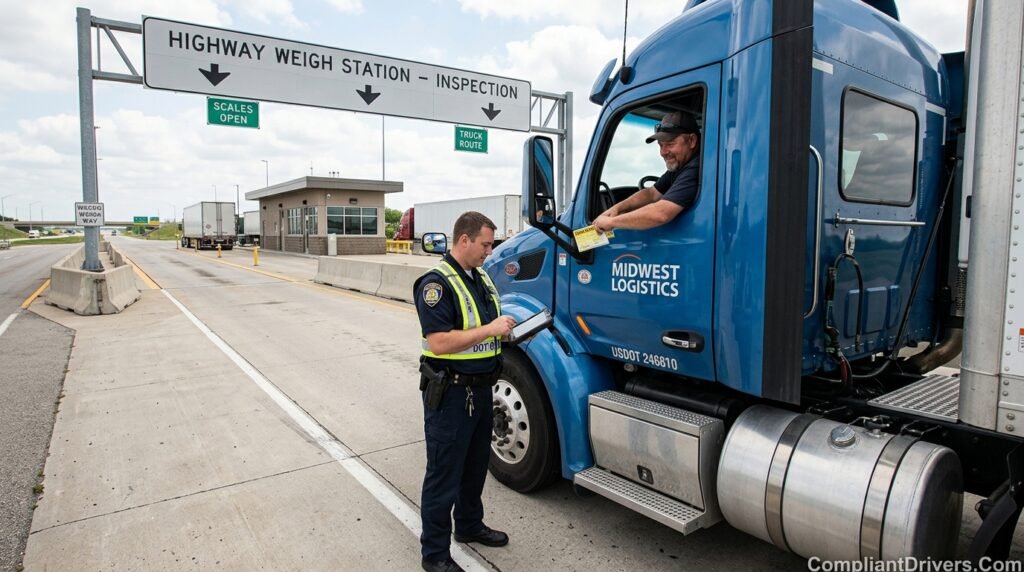
Permit violations create consequences beyond immediate roadside citations, similar to the cascading effects of CDL violations including DUI charges.
Direct Costs and Operational Impact
Roadside citations for permit violations typically range from several hundred to several thousand dollars depending on the specific violation and jurisdiction. Out-of-service orders add costs including towing, impound storage, administrative fees, and operational impact of stranded freight and disrupted customer deliveries.
Audit Examinations
Permit violations often trigger comprehensive audits. IFTA examinations review fuel purchases and mileage records, potentially covering multiple years. IRP audits verify reported mileage against all available documentation. Audits can result in retroactive tax assessments including unpaid taxes, penalties, and interest charges.
Safety Rating Effects
FMCSA classifies certain permit violations as Vehicle Maintenance BASIC violations. These create SMS points that affect safety ratings and inspection selection probabilities. Carriers with permit violation histories may be selected for detailed inspections at higher rates than carriers with clean compliance records.
Insurance and Commercial Impact
Commercial auto insurers review federal safety data during renewal underwriting. Recent permit violations may result in premium increases. Major shippers and brokers monitor carrier safety scores, and permit violations can affect preferred carrier status, load opportunities, and contract renewals.
Understanding the full scope of potential DOT fines and penalties helps carriers prioritize compliance investments appropriately.
Note: Actual amounts vary significantly by jurisdiction, circumstances, and carrier history.
How to Apply for Required Permits
IFTA Application Process
Contact your base state’s motor carrier division to obtain application forms. Required information typically includes legal business name and USDOT Number, federal tax ID and entity formation documents, complete vehicle list (VIN, weight, axle count), and current registration documentation.
Processing typically takes 10-15 business days. Application fees vary by state. Decals usually cost $4-$10 per set.
IRP Registration Process
Gather complete fleet data: VIN numbers, empty weights, odometer readings, and axle configurations. Calculate your mileage distribution for the previous 12 months, or prepare estimates for new operations.
Submit your application with vehicle ownership documents, insurance certificates meeting all jurisdiction minimums, and proportional fee payment based on mileage distribution.
Processing typically ranges from 10 days to 6 weeks depending on jurisdiction and application completeness.
UCR Registration Process
Visit the UCR national portal or your chosen state’s registration website. You’ll need your USDOT Number, current fleet size (determines fee bracket), and payment method for appropriate fee tier.
Registration is typically instant. Save electronic confirmation and maintain printed copies in your vehicles.
Trip Permit Applications
Before entering any state requiring temporary coverage, verify permit requirements through that state’s commercial vehicle website, gather vehicle information (VIN, plate number, gross weight), determine appropriate permit duration, and apply through the state’s online system (where available) or contact their permit office.
Digital Compliance Tools
Modern permit management relies on integrated technology rather than manual processes.
ELD Systems with IFTA Integration
Electronic logging devices that automatically track jurisdiction miles and compile quarterly reports eliminate transcription errors and provide auditable documentation. However, functionality varies significantly among providers. Evaluate ELD systems based on IFTA reporting accuracy, quarterly filing support, and audit documentation capabilities.
Permit Management Platforms
Specialized software centralizes all credentials in unified dashboards. These systems track renewal deadlines across multiple programs, maintain digital copies of all permits and supporting documents, generate automatic renewal reminders, and integrate with accounting systems for IFTA filing.
Digital Trip Permit Services
Multi-state platforms provide access to trip permits for dozens of jurisdictions through single interfaces. Real-time issuance eliminates emergency calls to state offices when routes change unexpectedly.
Cloud-Based Documentation
Maintaining digital copies of permits, fuel receipts, and mileage records satisfies federal retention requirements while providing instant access during inspections and audits. This approach mirrors best practices for maintaining electronic driver qualification files and safety records.
Common Compliance Mistakes
Mismatched reporting between IFTA and IRP. Quarterly fuel tax returns should align reasonably with annual registration mileage. Substantial discrepancies trigger audit reviews.
Operating outside declared jurisdictions. Your IRP cab card lists every registered state. Travel to unlisted states without trip permits violates both IRP agreements and state registration laws.
Using personal registration for commercial loads. Any commercial use requires commercial credentials regardless of vehicle ownership or frequency.
Delayed credential updates. Adding or retiring vehicles requires prompt base jurisdiction notification.
Missing quarterly deadlines. IFTA filing deadlines typically allow no grace periods.
Incomplete fuel documentation. Receipts must include all required data elements. Missing information makes purchases unverifiable during audits.
Operating on expired visible credentials. Officers cite based on what they observe. Renewed permits not yet displayed on vehicles result in violations.
Overlooking UCR renewal. Because UCR operates independently from other permits, it’s frequently forgotten.
Inaccurate mileage to reduce fees. Audit systems cross-reference reported miles against fuel purchases, weigh stations, ELD data, and shipping records.
Maintaining Compliance: Best Practices

Establish a compliance calendar tracking all renewal deadlines, quarterly filing dates, and supplemental application requirements. Use digital systems with multiple reminder intervals.
Assign clear responsibility for permit management. Even small operations benefit from designating one person to monitor deadlines, coordinate applications, and track regulatory updates.
Conduct monthly self-audits comparing ELD jurisdiction data against IFTA reports, verifying cab card jurisdictions match actual operations, and confirming all credentials remain current.
Maintain organized records including digital copies of all permits, complete fuel purchase documentation, and proof of multi-year compliance.
Train all drivers on credential requirements, proper document handling, and procedures if permits are questioned during inspections.
Build jurisdiction relationships by establishing direct contacts at IFTA and IRP offices, asking questions proactively, and attending available training sessions.
Implement strategic technology through ELD systems with IFTA reporting, permit management platforms, and cloud documentation storage.
Plan fleet changes carefully by notifying jurisdictions within required timeframes when adding vehicles, properly retiring credentials for disposed equipment, and maintaining accurate inventories.
Frequently Asked Questions
Officers may issue citations and potentially place the vehicle out of service until proper credentials are obtained. Violations are reported to FMCSA and may trigger broader compliance examinations. Specific penalties vary by jurisdiction.
IRP covers all member jurisdictions where you declare mileage. Your cab card lists authorized states. You can only operate in listed states unless you obtain trip permits for additional jurisdictions.
If your vehicles meet weight thresholds and cross state lines, you typically need both. IFTA handles fuel tax reporting while IRP manages registration. They serve different purposes and neither exempts you from the other.
USDOT Number approval typically takes 10-20 business days. IFTA credentials usually process in 10-15 days. IRP registration may take 2-6 weeks. UCR registration is often instant online. Plan for approximately 6-8 weeks total before starting interstate operations.
Operating authority (MC Number) grants federal permission to transport freight for compensation. Permits handle operational requirements: fuel taxes, registration fees, and federal programs. Both are typically required but serve different regulatory purposes.
While permit violations primarily impact your carrier operating authority, serious or repeated violations can indirectly affect your commercial driver’s license through CSA points and safety ratings. Some states also consider permit violations when assessing license suspension points.
Conclusion
Effective permit compliance requires understanding which credentials your operation needs, maintaining accurate documentation, and meeting consistent deadlines across multiple programs. Carriers who implement systematic processes—using appropriate technology, maintaining organized records, and staying informed about changes—generally find compliance becomes more manageable over time.
For comprehensive guidance on related compliance topics, explore our resources on DOT compliance truck inspections, cargo securement rules, and maintaining proper driver qualification files.
About This Guide
This compliance resource was developed by the Compliant Drivers Editorial Team through consultation with state motor carrier divisions, IFTA administrators, IRP offices, and transportation compliance professionals. Our team includes former DOT auditors, safety compliance specialists, and transportation attorneys who bring real-world enforcement experience to our guidance.
We maintain ongoing relationships with regulatory agencies including the Federal Motor Carrier Safety Administration, IFTA Inc, and the International Registration Plan to ensure our content reflects current regulatory interpretations and enforcement priorities.
Editorial Process: All content undergoes multi-level review including technical accuracy verification, legal compliance review, and readability testing. We cross-reference information with official federal and state sources before publication.
Update Schedule: Content is reviewed quarterly and updated immediately when significant regulatory changes occur. The next scheduled review for this guide is July 2026.
Sources: FMCSA regulations (49 CFR Parts 365-399), state motor carrier publications, IFTA official resources, IRP Plan documentation, and current industry compliance reports from CVSA, ATA, and OOIDA.
Expertise Statement: Our editorial team collectively brings over 65 years of experience in commercial vehicle compliance, including direct experience with FMCSA enforcement, state-level motor carrier regulation, and fleet compliance management.
Last Updated: May, 2026
Important Disclaimers and Verification
Regulatory Variability: Trucking permit requirements, application procedures, fee structures, and penalty assessments vary significantly by jurisdiction and change regularly. This guide provides general information reflecting common practices as of May 2026. Individual state requirements may differ substantially from the general practices described here.
Verification Requirement: Before making any operational decisions based on this information, verify current requirements with:
- Your base jurisdiction’s motor carrier division
- The specific states where you operate
- The IFTA official website for fuel tax requirements
- The IRP official website for registration requirements
- The UCR portal for annual fee information
- The FMCSA website for federal regulations
Not Legal Advice: This article provides general compliance education and should not be considered legal advice or a substitute for professional consultation. Permit requirements interact with complex state and federal regulations that may apply differently to your specific operation.
Professional Consultation Recommended: For specific questions about your operation, when facing audits or enforcement actions, or when expanding into new jurisdictions, consult with:
- Qualified transportation attorneys licensed in your operating states
- Licensed compliance consultants with current regulatory expertise
- Your state motor carrier division’s compliance assistance office
- Certified public accountants familiar with transportation tax requirements
Data Accuracy Limitations: Fee amounts, fine ranges, processing timeframes, and cost estimates reflect available information from 2025-2026 and are provided for general illustration only. Actual amounts vary based on jurisdiction, specific circumstances, carrier history, and timing. These figures should not be used for budgeting or financial planning without verification.
Temporal Limitations: Regulatory changes occur frequently. Information that was accurate at publication may become outdated. Some states update requirements annually, while others make changes throughout the year. Always confirm current requirements before relying on any specific information in this guide.
No Guaranteed Outcomes: Following the practices described in this guide does not guarantee audit avoidance, violation prevention, or any specific compliance outcome. Each carrier’s situation is unique and may require different approaches based on operating patterns, jurisdiction mix, equipment types, and cargo specifications.
Third-Party References: Mentions of specific software platforms, compliance services, or technology solutions are for informational purposes only and do not constitute endorsements or recommendations. Evaluate all services independently based on your specific needs and verify claims with multiple sources.
Contact Information for Official Agencies:
- Federal Motor Carrier Safety Administration: fmcsa.dot.gov | 1-800-832-5660
- IFTA Inc.: iftach.org
- International Registration Plan: irponline.org
- Unified Carrier Registration: ucr.gov
For state-specific requirements, contact your base jurisdiction’s Department of Transportation or Motor Carrier Division directly.